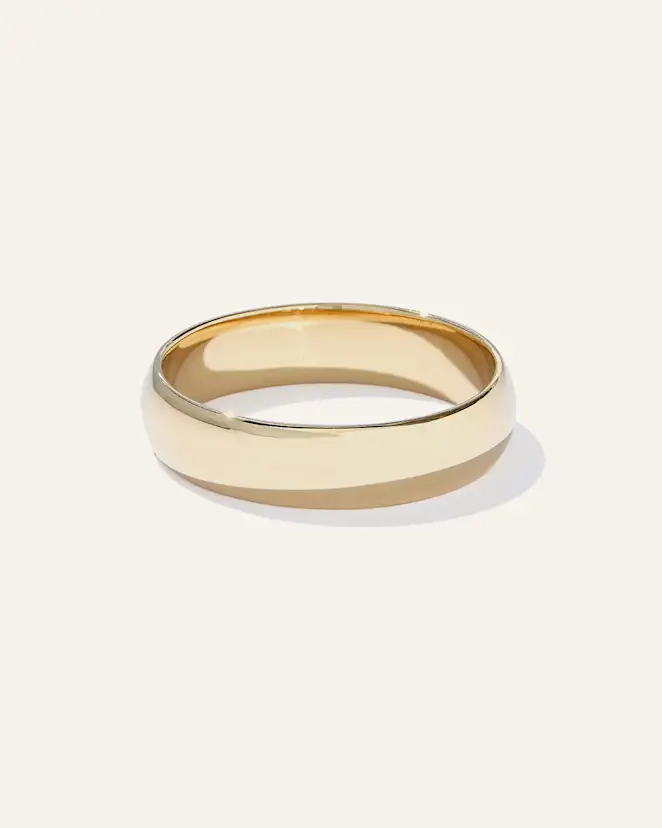
Tungsten Carbide Brushed Beveled Edge Band
$129.90


ALL YOUR QUESTIONS, ANSWERED
How do I choose between 14K gold, sterling silver, and tungsten carbide for a men's ring?
14K gold is the most traditional and the longest-lasting metal — softens slightly with age but holds value, suits dressy and daily wear. Sterling silver is the most affordable everyday option — develops patina over time, polishes back to bright shine easily. Tungsten carbide is the most scratch-resistant metal here — best for wedding bands and daily wear by people whose hands take a beating. Tungsten cannot be resized, so confirm size before ordering.
What is a signet ring and when do I wear one?
A signet ring is a flat-topped ring with an engraveable face — historically a family seal, today a personal accent or initial monogram. Quince signet rings come in oblong and round flat-top styles, with and without pavé diamond detail. Worn on the pinky finger of the dominant hand traditionally, but contemporary styling places signet rings on any finger as a statement accent. They're a popular gift for milestone birthdays and graduations.
Will tungsten carbide rings stand up to daily wear and water?
Yes — tungsten carbide is one of the hardest metals used in jewelry (Mohs hardness 8.5-9.5, versus gold at 2.5-3 and silver at 2.5). Scratch-resistant in everyday wear, including against hard tools and surfaces. Water-safe but always remove before chlorinated pools and hot tubs. The main trade-off is brittleness — tungsten won't bend or stretch, but a hard sharp impact can shatter it. Cannot be resized, so confirm fit before ordering.
What are lab-grown diamonds, and how do they compare to mined diamonds?
Lab-grown diamonds are real diamonds — chemically, physically, and optically identical to mined diamonds — created in a controlled lab environment over several weeks rather than millions of years. They cost 30-70% less than mined equivalents at the same carat weight, color, clarity, and cut. Lab-grown also carries a lower environmental and ethical footprint (no mining). Quince lab-grown diamonds are graded to the same GIA-equivalent standards used for mined stones.
How do I care for fine jewelry day-to-day?
Remove jewelry before showering, swimming (chlorine and saltwater damage metals), exercising, applying lotion or perfume, and sleeping (chain tangling). Wipe pieces with a soft cloth after wearing to remove skin oils. For deeper cleaning, soak in mild dish soap + warm water for 10 minutes, brush gently with a soft toothbrush, and rinse. Store each piece separately to prevent scratching — original Quince pouches are designed for piece-by-piece storage.
How do I figure out my ring or chain size?
For rings: measure an existing ring that fits the intended finger (inside diameter in mm) or order a printable ring sizer; US sizes 5-13 cover most adult fingers. For chains: 18-20 inches is standard for crewneck necks; 22-24 inches drops just below the collarbone; 26+ inches falls mid-chest. For bracelets: measure wrist circumference and add 0.5-1 inch for comfortable fit. Each product page lists size guides.